Dance at the Moulin de la Galette - Auguste Renoir
Excellent 450+ avis vérifiés





L'œuvre en bref
Shown at the third Impressionist exhibition in 1877, Dance at the Moulin de la Galette is arguably Auguste Renoir's most celebrated masterpiece. The painter, then living in Montmartre, was a regular at this open-air dance hall on rue Lepic, where Parisian youth gathered to dance on Sunday afternoons beneath the trees. Renoir had his friends pose for him there — painters and the neighborhood's regular models — among them his friend the journalist Georges Rivière, the painter Frédéric Cordey, and his faithful model Estelle. The painting belongs to the great tradition of modern leisure scenes then being developed by Édouard Manet and Edgar Degas, but with a joie de vivre and a human warmth that are uniquely Renoir's.
The composition teems with figures arranged across multiple planes: on the right, a group seated at a table with glasses of grenadine chats animatedly, while in the background, couples in close embrace whirl to the music of the orchestra. An exceptional play of light runs through the canvas: sunbeams, filtered through the foliage, scatter golden and bluish patches across the clothing and faces, creating what Renoir himself called pochades de soleil ("sun sketches"). This bold technique, which partially dissolves outlines into a luminous vibration, was criticized at the time by some who found it muddled. Today, it is regarded as one of Impressionism's major technical achievements, where painting manages to capture all at once the movement, the noise, and the warmth of a Parisian summer Sunday.
Looking to buy another Auguste Renoir reproduction? Browse all our reproductions by this artist.
Comparez avec l’original
Reproduction of Liberty Leading the People by Eugène Delacroix


Find out more about our accredited expert
Jean-Sebastien Altmann

Expert in works of art accredited by the National Chamber of Specialised Experts (CNES)
Find out why so many satisfied customers choose Galerie Mont-Blanc for their art purchases.
Click here to watch the video presentation




Features of our paintings

Our paintings are done entirely in oil paint. The meticulous work of detail coupled with the exceptional talent of our painters are the keystones of the intensity and depth of our paintings.

Our linen and cotton canvases are extremely durable, giving our work an exceptionally long life. They are resistant to tension, humidity and temperature variations.
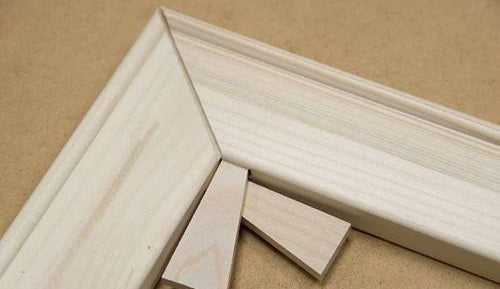
Our solid wood frames are made of aspen from sustainably managed forests (FSC certified). They are treated to ensure exceptional stability and are free of any resin.
Why choose Galerie Mont-Blanc ?